
Insight
The Future of A/E Accounting
September 28, 2026
Electrical upgrades in healthcare facilities are rarely as simple as removing old equipment and installing new. Hospitals are expected to operate continuously, even while critical infrastructure reaches the end of its service life. Medium voltage switchgear, transformers, automatic transfer switches, and distribution equipment all have finite lifespans, but the facilities they serve are often expected to remain operational for many decades longer.
In occupied healthcare environments, downtime carries significant risk. Even a planned outage can affect patient care, clinical operations, research activities, environmental systems, and facility staff. The question becomes not simply how to replace equipment, but how to do so while minimizing disruption and preserving reliability throughout the process.
Every project begins with understanding the existing electrical distribution architecture and the physical environment surrounding the equipment. Existing drawings may no longer reflect field conditions. Conduit routing may differ from historical documentation. Working clearances may be constrained by decades of renovations and infrastructure growth. In many cases, the physical limitations of the room become just as important as the electrical design itself.
Successful phasing requires engineers to think beyond the one-line diagram.
The engineer must evaluate how contractors will physically perform the work, how temporary power will be installed, how equipment will be removed and replaced, and whether the proposed sequence is practical under real construction conditions. In some cases, the “best” solution on paper may become unworkable once installation access, cable routing, or outage duration is considered.
That process often involves developing multiple sequencing options before identifying the approach that minimizes disruption and overall risk.
Visualization becomes critical during this stage. One of the most effective tools in developing phasing strategies is sketching and diagramming the sequence itself. Temporary system configurations, switching arrangements, rollback procedures, and intermediate operating states are often easier to understand visually than through written notes alone. Creating phased one-line diagrams and sequence drawings not only improves communication to contractors and facility staff but also helps engineers identify weaknesses or conflicts within the sequence before construction begins.

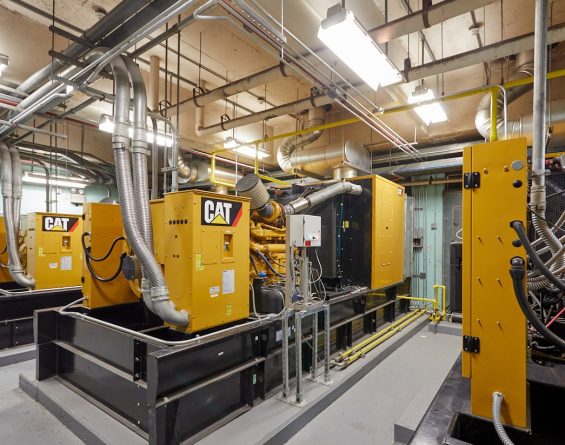
In many projects, temporary generators, mobile substations, temporary feeders, and selective load transfers become essential tools for maintaining continuity of service while aging infrastructure is replaced. However, temporary power introduces its own risks and complexities. Grounding methods, overcurrent protection coordination, equipment ratings, cable routing, and physical protection all require careful consideration. Temporary systems must often operate with the same level of reliability and safety expected from the permanent infrastructure they are supporting.
Equally important is the concept of reversibility. A well-developed phasing plan should not assume that every step proceeds perfectly. Electrical equipment can fail unexpectedly during commissioning. Breakers may not close properly. Existing conditions discovered during demolition may differ from assumptions made during design. For that reason, each phase should include a strategy for safely restoring power and returning the system to a stable operating condition if work cannot proceed as planned.
In practice, this means avoiding steps where there is “no turning back.” The sequence should include off-ramps that allow contractors and facility personnel to pause, stabilize the system, and recover safely if unexpected conditions arise. Designing these recovery paths is often just as important as designing the primary sequence itself.
Collaboration is also central to successful phasing. Facility electricians and operators often possess decades of institutional knowledge about how systems actually behave under real operating conditions. Contractors contribute practical insight into installation feasibility, outage durations, and temporary power logistics. Equipment manufacturers provide guidance regarding equipment limitations, modernization strategies, and compatibility concerns. Peer review from experienced engineers can also reveal blind spots or sequencing risks that may otherwise go unnoticed.
The most successful healthcare electrical upgrades are rarely the result of a single design decision. They are the product of careful planning, clear communication, and continuous coordination between engineers, facility staff, contractors, and manufacturers.
Ultimately, successful phasing is often measured by what never happens: the outage that never occurs, the patient care disruption that is avoided, or the operational crisis that never materializes. When executed well, the process can appear almost uneventful from the perspective of building occupants. Behind the scenes, however, that continuity is supported by extensive planning, sequencing, contingency analysis, and coordination.
As healthcare facilities continue to modernize aging electrical infrastructure, thoughtful phasing strategies will remain essential to balancing reliability, safety, constructability, and operational continuity. The goal is not simply to replace equipment but to do so while maintaining the trust that healthcare facilities place in their electrical systems every day.