
Insight
The Future of A/E Accounting
September 28, 2026
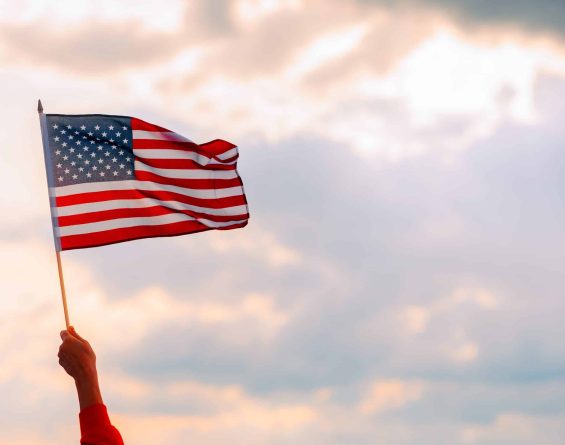
It happened at a local baseball game.
Not the World Series. Not Opening Day. Not even a playoff game. Just an ordinary summer evening at a hometown ballpark.
Before the first pitch, I wandered into the gift shop behind home plate to buy a cap. Parents browsed racks of T-shirts while children debated which souvenir they couldn’t possibly leave without. Someone balanced a tray of popcorn and drinks as the cashier made change. Through the open doorway drifted the familiar sounds of batting practice, laughter, and the steady murmur of a crowd settling into another summer evening.
Over the stadium loudspeakers, a teenage girl began singing The Star-Spangled Banner.
What happened next has stayed with me ever since.
Without a word, every conversation stopped. People instinctively turned toward the field, even though none of us could actually see it. The walls of the gift shop blocked our view of the flag, the singer, and the players. All we could hear was her voice carried across the stadium.
Hats came off. Hands found hearts. Even the children grew quiet.
For nearly two minutes, complete strangers stood together in respectful silence.
When the final note faded, conversations quietly resumed. Parents gathered their purchases, the cashier finished making change, and the umpire called, “Play ball.” The evening continued exactly as it had before.
But that moment never left me.
I’ve thought about that evening many times since. No one instructed us to stand. No one checked to see who did and who didn’t. We couldn’t even see the flag. Yet everyone in that little gift shop understood that this was a moment deserving of reverence.
As America celebrates its 250th anniversary, I can think of no better time to ask a remarkably simple question.
Why do we stand?
The answer, I have come to believe, has little to do with the flag itself.
Throughout history, flags have identified nations, armies, and governments. The American flag does that as well. But over the past two and a half centuries, it has come to represent something more. For millions of Americans—and for countless others around the world—it has become the symbol of an extraordinary idea first declared in 1776: that our rights do not come from a king, a parliament, or even a government. They belong to us because we are human, and governments exist to secure those rights, not bestow them.
That idea was revolutionary.
It still is.
Long before there was a fifty-star flag, before there was a thirteen-star flag, before there was even a United States, there were ordinary men and women willing to risk everything for principles they believed were worth preserving. They did not fight merely for a piece of cloth. They fought for ideals that would one day find their symbol in one.
And that symbol belongs equally to all of us. It does not belong to the President, to Congress, to the military, or to any political party. It belongs to every American. A child raising the flag before school and the President saluting it honor exactly the same symbol. Few things in our national life place every citizen on such equal ground.
None of us remembers learning to stand during the National Anthem. There was probably never a formal lesson. We simply watched those who came before us. We watched our parents rise to their feet. We watched our grandparents place a hand over their hearts. We watched veterans quietly remove their caps. Somewhere along the way, without anyone explaining it, we understood that this moment was different.
That is how a republic teaches itself—not only through constitutions and classrooms, but through quiet examples repeated so often they become part of who we are. The most enduring traditions are rarely announced; they are inherited. One generation lives them, the next generation observes them, and before long those children are passing them to their own sons and daughters without ever remembering when they first learned them.
History offers no shortage of remarkable American flags.
People rightly remember the flag that inspired Francis Scott Key after the bombardment of Fort McHenry. Others picture the flag raised atop Mount Suribachi after the Battle of Iwo Jima or the one standing on the surface of the Moon. Each represents a defining moment in our nation’s story and reminds us of the courage, sacrifice, and ambition that have marked the American experience.
Yet I do not believe those are the flags that matter most.
The most remarkable American flag is usually the one no one photographs. It flies quietly above a country school, a volunteer fire station, a small-town courthouse, a family farm, a church, a post office, or a front porch. It waves over places where no history books are written and no television cameras gather. Yet those ordinary flags bear witness to the quiet lives that have sustained an extraordinary Republic.
The American story has never belonged solely to presidents, generals, or astronauts. It has always belonged to ordinary citizens whose daily choices gave lasting strength to the ideals first declared in 1776.
Over the past 250 years, each generation has added another chapter to that story. Soldiers carried the flag into battle. Immigrants looked toward it with hope as they began new lives. Families received it, carefully folded into a triangle, as a grateful nation honored one final act of service.
The fabric has changed countless times, but its meaning has only grown. We do not salute cloth. We honor the generations whose lives gave it meaning.
Each generation inherits a Republic it did not build. Each accepts the responsibility to preserve it before passing it to those who follow. Freedom is never merely inherited; it is entrusted. Every generation must decide whether it will leave that trust stronger than it found it.
The flag quietly reminds us that we are part of that unbroken chain. It asks very little of us individually, yet it asks one thing of every generation: to remember that liberty is not self-sustaining. Like any inheritance worth receiving, it survives only when those entrusted with it choose to preserve it.
Strong institutions endure because they preserve more than knowledge. They preserve memory, values, and standards. Every profession, every community, every family, and every nation inherits something it did not create. Each generation must decide whether it will simply consume that inheritance or strengthen it before passing it forward. The greatest legacies are not measured only by what we build, but by what we faithfully preserve.
That is why the institutions that preserve our shared civic memory matter so deeply. Whether they are historical societies, veterans’ organizations, schools, museums, libraries, community volunteers, or simply families gathered around a dinner table, each serves as a steward of something larger than itself—the stories, traditions, and ideals that bind one generation to the next.
Their work is not simply the preservation of historic places or records. They serve as custodians of our national memory, ensuring that each generation receives not only the history of the American Revolution, but the inheritance of its ideals.
At first glance, their work appears to be about preserving history. They restore cemeteries, preserve historic places, maintain archives, teach children, recognize good citizenship, welcome new Americans, and keep alive the stories that might otherwise be forgotten. Those are worthy endeavors, but I have come to believe they are not their greatest contribution.
Their greatest work is preserving memory.
History can be recorded in books, archived in libraries, or displayed in museums. Memory is history that has become personal. It lives in families, in traditions, in stories told around dinner tables, and in quiet moments when one generation teaches another what it means to be an American. When memory fades, symbols eventually become decorations instead of reminders. Memory is what gives them life.
That is why the flag inspires such reverence. Not because of its design, but because generations of Americans have entrusted it with their own stories. Every sacrifice, every act of courage, every quiet display of character, and every choice of duty over comfort has added another thread to its meaning.
Consider how memory is preserved.
A veteran is remembered.
A child hears the story of a Revolutionary soldier for the first time.
A family discovers an ancestor whose name had nearly been forgotten.
A new citizen raises a hand and takes the Oath of Allegiance.
Individually, none of those moments change history.
Together, they ensure that history is never forgotten.
That is the quiet work of remembrance. It rarely makes headlines, yet it shapes a nation just as surely as the great events recorded in our history books. Every ceremony, every restored headstone, every lesson taught to a child sends the same quiet message:
These people mattered.
Their sacrifices mattered.
And their story still matters.
The work of preserving memory is often invisible while it is happening. We usually recognize its influence only years later, in moments that seem ordinary until we stop to ask why they mattered.
I suspect that is what happened in that little baseball gift shop.
I doubt anyone there was consciously thinking about the Declaration of Independence or the hardships endured by the Revolutionary generation. Most were probably wondering whether the home team was going to win. But somewhere along life’s journey, someone had quietly taught them that this moment mattered.
They stood because they shared an inheritance, and that inheritance was not a piece of cloth. It was the continuing promise that every generation receives, preserves, and passes forward.
That, I believe, is the true miracle of the American flag.
Not that it has flown over battlefields, stood upon the surface of the Moon, or become one of the most recognizable symbols in the world. Those are remarkable achievements, but they are not what makes the flag extraordinary.
Its greatest achievement is quieter than any of them.
For 250 years, it has inspired ordinary Americans to pause, remove their hats, place a hand over their hearts, and remember—if only for a moment—that they are part of something larger than themselves.
A nation can create a flag in a day. It takes generations to give it meaning.
I honestly couldn’t tell you who won that baseball game.
But I remember exactly what happened before the first pitch.
For two quiet minutes, complete strangers stood together in silence. They did not all share the same life, the same experiences, or even the same opinions. Yet, for that brief moment, they shared the same gratitude—for those who came before them, for the ideals that united them, and for the responsibility they now carried forward.
That is why we stand.