
Indian Health Services Arizona Master Plan
Project
VA Augusta Emergency Department
A state-of-the-art ED addition that enhances emergency care, streamlines patient flow, and strengthens the medical center’s long-term resiliency.
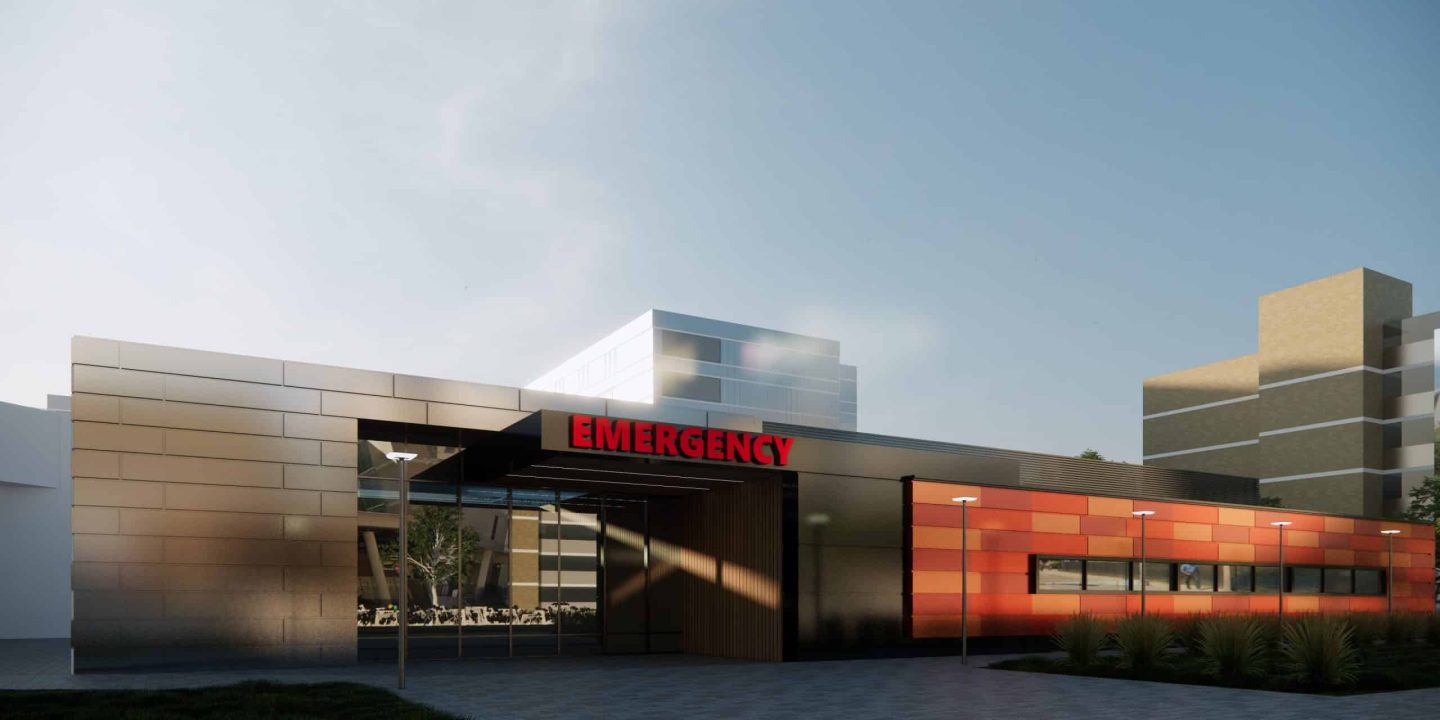
Apogee Consulting Group is providing full A/E services for a new 14,500-BGSF Emergency Department (ED) addition and 680-BGSF renovation at the Charlie Norwood VA Medical Center. The project addresses undersized, operationally constrained conditions and is designed to support approximately 26,000 annual patient visits. The expanded ED adds exam and treatment spaces, two resuscitation rooms, on-site imaging (CT and X-ray), a satellite lab, staff support functions, and a dedicated vehicular drop-off with reconfigured parking. A new, clearly defined ED entrance enhances wayfinding, safety, and patient flow by separating it from the main hospital entry.
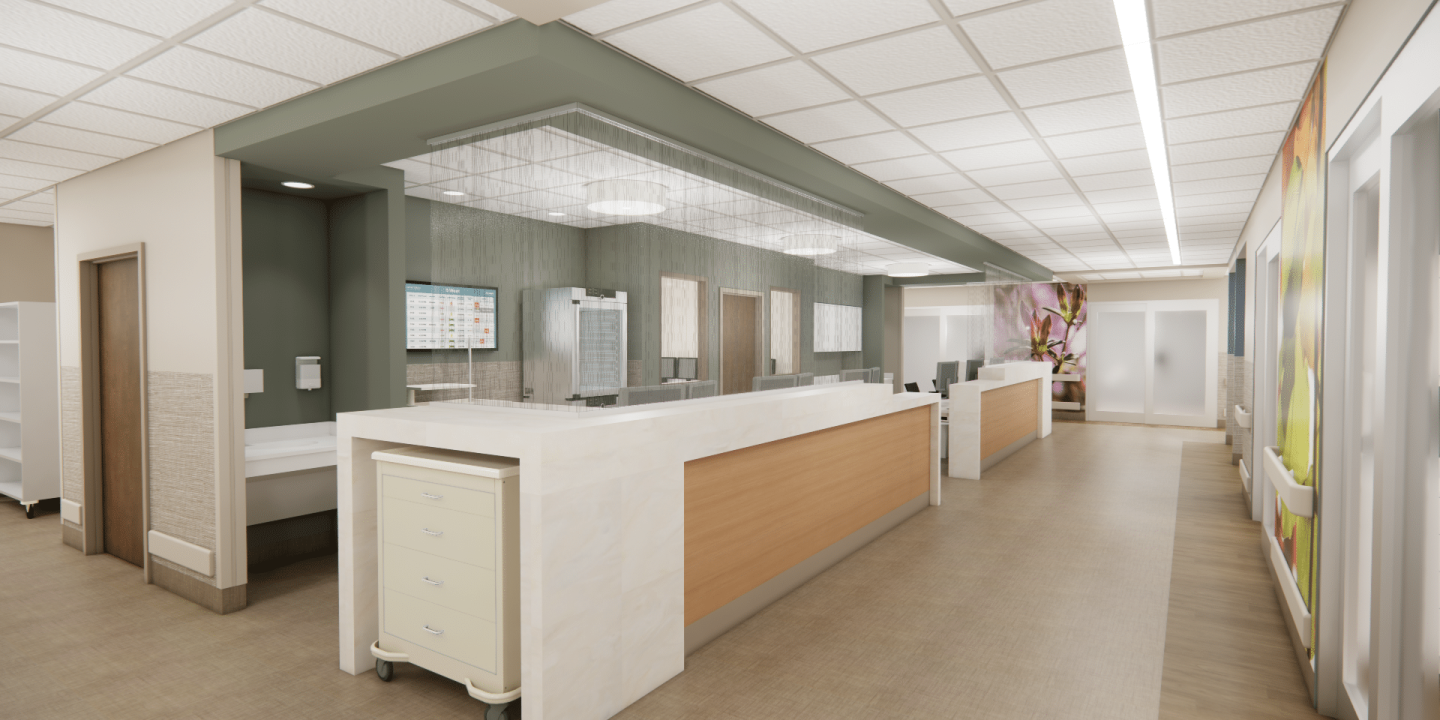
The design incorporates an efficient racetrack layout with perimeter exam rooms for access to natural daylight, centralized care-team collaboration zones, and dedicated vertical patient bays to improve throughput and clinical visibility. Exterior materials—brick masonry, horizontal window bands, and a metal panel feature—complement the existing campus while highlighting the ED’s prominence. Civil improvements include relocation of site utilities, a new sanitary outfall, modified vehicular circulation, and compliance with the VA’s 50-foot physical security standoff requirements. Mechanical, electrical, plumbing, and telecom systems support full ED functionality, including a dedicated rooftop penthouse, new chillers, expanded emergency power, enhanced nurse call, and upgraded security systems.
Architectural planning was closely coordinated with structural framing, blast-resistant façade requirements, and MEP infrastructure routing, including medical gas distribution and seismic restraints. Landscape, civil, and security design work maintained safe pedestrian and vehicular circulation, while interior design incorporated biophilic elements and modular casework to improve durability, cleanliness, and infection-control performance.
A two-phase construction strategy maintains uninterrupted ED operations: the new ED addition is constructed first, after which connection work proceeds in Phase 2. Once complete, the facility will significantly improve patient throughput, expand clinical capacity, strengthen resiliency, enhance staff workflow, and provide a welcoming, intuitive environment for Veterans and their families.
Client
U.S. Department of Veterans AffairsLocation
Augusta, GAServices
Project Management, MEP Engineering, Architecture, Structural Engineering, Telecom, Interior Design, Cost EstimatingSize
15,180 GBSFConstruction Cost
$19.3MMore Projects
previous project
next project
VA New Albany Community Based Outpatient Clinic